 Uganda
 India
India Kenya
Kenya
Sustainable Farming

Measuring what matters: our upgraded MEL system
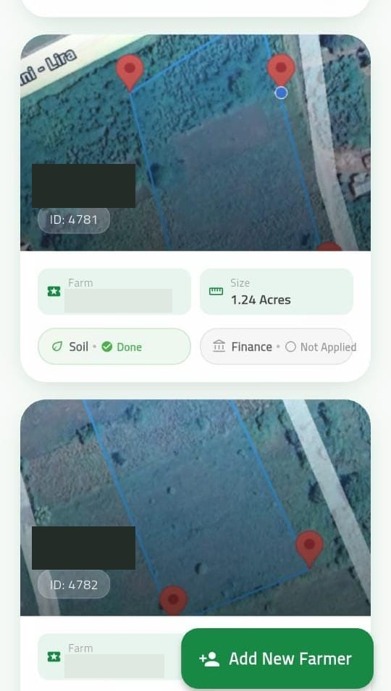
We now track every farmer trained, every soil test and every agent against target, daily and inside our own apps, instead of collecting it in spreadsheets at month-end. Monitoring, Evaluation and Learning have moved from a reporting chore to the way we run the business.
Why we rebuilt MEL
Impact investors and development partners ask the same questions: How many farmers did you reach? Did they change practice? Did their incomes rise? Answering with paper forms and month-end spreadsheets was slow, and the numbers were hard to verify. Duplicate registrations from past agents and missing GPS points showed us the old way would not be scaled.
What changed
1. Data is captured at the source. Field officers and agents record training, farmer profiles and soil tests in the DigiAgent app as they happen. Each record carries the farmer's details, group and GPS location.
2. Every officer has live targets. Each field officer sees their monthly targets in the app: groups reached, farmers trained, soil tests done, agents onboarded. For October, a single officer's targets include 1,000 farmers, 150 soil tests and 20 financing agents.
3. A daily rhythm of review. Every morning, our team reviews yesterday's numbers in a short huddle. Meeting notes are summarized automatically, and action items go straight into our Worknest task system, each with an owner.
4. Built-in checks. The system flags duplicate farmers and checks agent credentials before any payment. Location mapping was fixed so every farm points to real coordinates, not a default map.
5. From outputs to outcomes. Because soil tests, input purchases and sales sit on the same farmer record, we can follow a farmer from first training to paid services and, over time, to yield and income.
What the data already tells us
Daily tracking lets us correct courses within days, not quarters. In September it showed that long trips were costing more than they earned, and that paid soil tests lagged training. We changed the field approach, and paid tests rose to 14 in a single outing in early October.
Why this matters to investors
• Trustworthy impact numbers. Every reported farmer links to a real, located record.
• Faster decisions. Problems show up in days, so capital is spent where it works.
• Ready for impact reporting. The same data feeds donor, grant and investor reports without extra field work.
Why we rebuilt MEL
Impact investors and development partners ask the same questions: How many farmers did you reach? Did they change practice? Did their incomes rise? Answering with paper forms and month-end spreadsheets was slow, and the numbers were hard to verify. Duplicate registrations from past agents and missing GPS points showed us the old way would not be scaled.
What changed
1. Data is captured at the source. Field officers and agents record training, farmer profiles and soil tests in the DigiAgent app as they happen. Each record carries the farmer's details, group and GPS location.
2. Every officer has live targets. Each field officer sees their monthly targets in the app: groups reached, farmers trained, soil tests done, agents onboarded. For October, a single officer's targets include 1,000 farmers, 150 soil tests and 20 financing agents.
3. A daily rhythm of review. Every morning, our team reviews yesterday's numbers in a short huddle. Meeting notes are summarized automatically, and action items go straight into our Worknest task system, each with an owner.
4. Built-in checks. The system flags duplicate farmers and checks agent credentials before any payment. Location mapping was fixed so every farm points to real coordinates, not a default map.
5. From outputs to outcomes. Because soil tests, input purchases and sales sit on the same farmer record, we can follow a farmer from first training to paid services and, over time, to yield and income.
What the data already tells us
Daily tracking lets us correct courses within days, not quarters. In September it showed that long trips were costing more than they earned, and that paid soil tests lagged training. We changed the field approach, and paid tests rose to 14 in a single outing in early October.
Why this matters to investors
• Trustworthy impact numbers. Every reported farmer links to a real, located record.
• Faster decisions. Problems show up in days, so capital is spent where it works.
• Ready for impact reporting. The same data feeds donor, grant and investor reports without extra field work.
Comments (0)